


Best-Selling Maldives Tour

History
The Maldives, a tropical paradise in the Indian Ocean, has a rich history shaped by traders, sailors, and diverse cultural influences. Its history stretches back over 2,500 years, with early settlers arriving from the Indian subcontinent and Sri Lanka. Over the centuries, the Maldives became an important stop for Arab traders, which introduced Islam to the islands in the 12th century. The nation later experienced periods of Portuguese, Dutch, and British influence before gaining full independence in 1965. Despite these influences, the Maldives has preserved its unique identity, culture, and traditions.
The Maldives’ story is defined by its strategic location along ancient trade routes, the spread of Islam, and its centuries-old governance through sultanates. After becoming a republic in 1968, the country began transforming from a fishing-based economy into one of the world’s most desired luxury tourism destinations.
Today, the Maldives blends its historical legacy with modern development, offering visitors a glimpse into island traditions alongside contemporary luxury and environmental conservation efforts.
Good to Know
Country
Visa Requirements
Language Spoken
Currency Used
Area (km2)
Geography
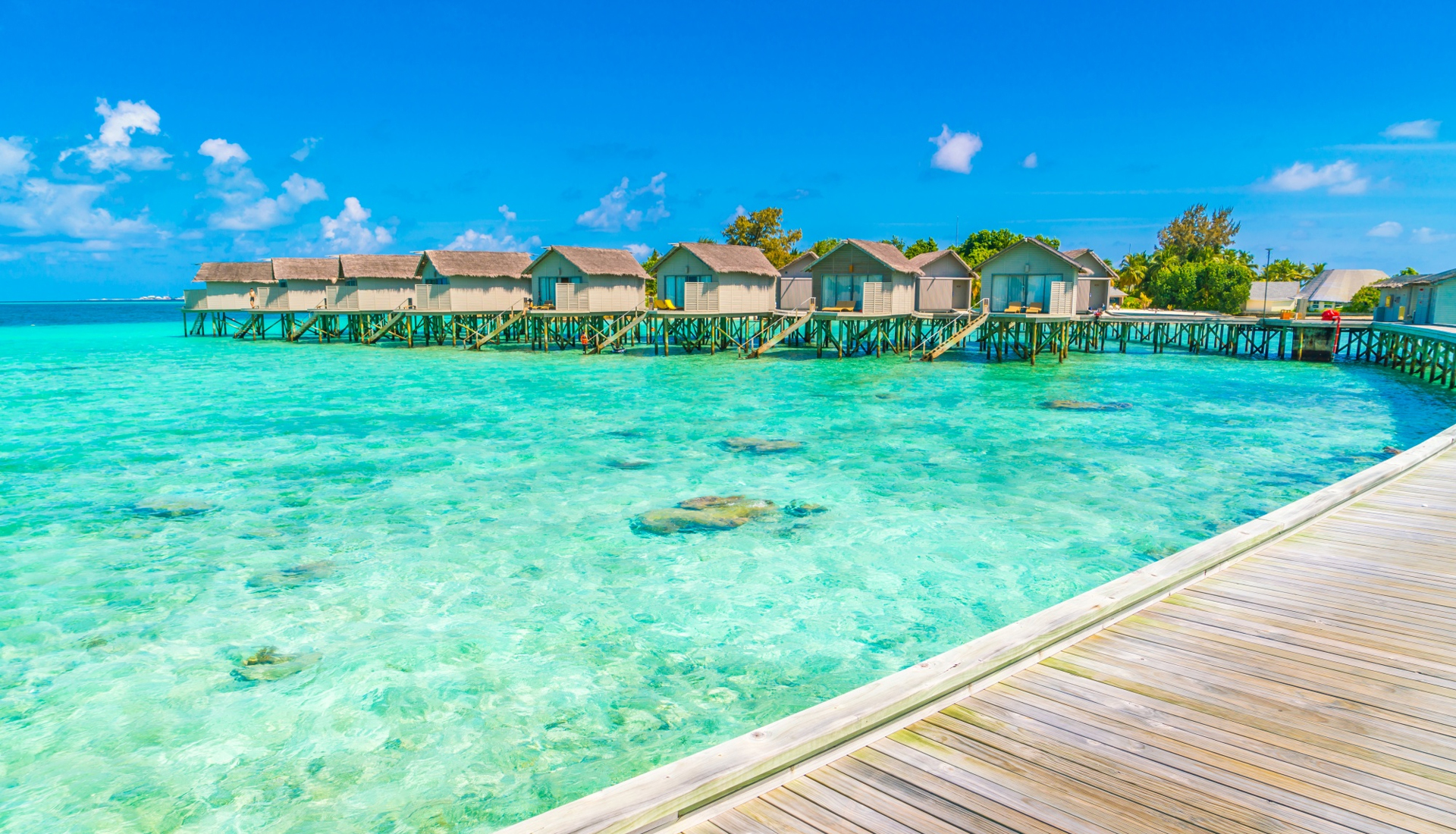
The Maldives is an island nation consisting of 26 atolls and over 1,000 coral islands stretching across the Indian Ocean. Known for its crystal-clear waters, white sandy beaches, and vibrant marine life, the Maldives is one of the world’s most iconic tropical destinations. Most islands sit just a metre above sea level, making the country famous for its picturesque overwater villas and turquoise lagoons.
The nation’s geography features coral reefs, shallow lagoons, palm-fringed beaches, and endless stretches of ocean. Its warm, tropical climate with year-round sunshine makes it ideal for water activities such as snorkeling, diving, and paddleboarding.
Thanks to its unique environmental makeup, the Maldives is a haven for marine biodiversity, offering some of the world’s best underwater experiences, from manta ray encounters to vibrant coral gardens.
Culture
Maldivian culture is a blend of South Asian, Arab, and African influences shaped through centuries of trade and migration. Islam plays a central role in Maldivian identity, influencing its traditions, architecture, and community life. Traditional music and dance such as Bodu Beru, along with handicrafts like lacquerwork and mat weaving, highlight the nation’s artistic heritage.
Maldivian cuisine, centered around tuna, coconut, and fresh seafood, is a delicious showcase of the islands’ culinary heritage. Modern Maldivian life reflects a balance of traditional customs and contemporary influences drawn from tourism and global culture.
Why You Should Visit
The Maldives is the ultimate destination for luxury, relaxation, and natural beauty. With its world-famous overwater villas, turquoise lagoons, rich marine life, and soft sandy beaches, it offers a truly unforgettable escape. Whether you’re seeking romantic seclusion, water adventures, spa indulgence, or simply a serene getaway, the Maldives provides an unmatched island paradise. The warm hospitality, pristine surroundings, and serene atmosphere make it one of the most desirable destinations on Earth.